



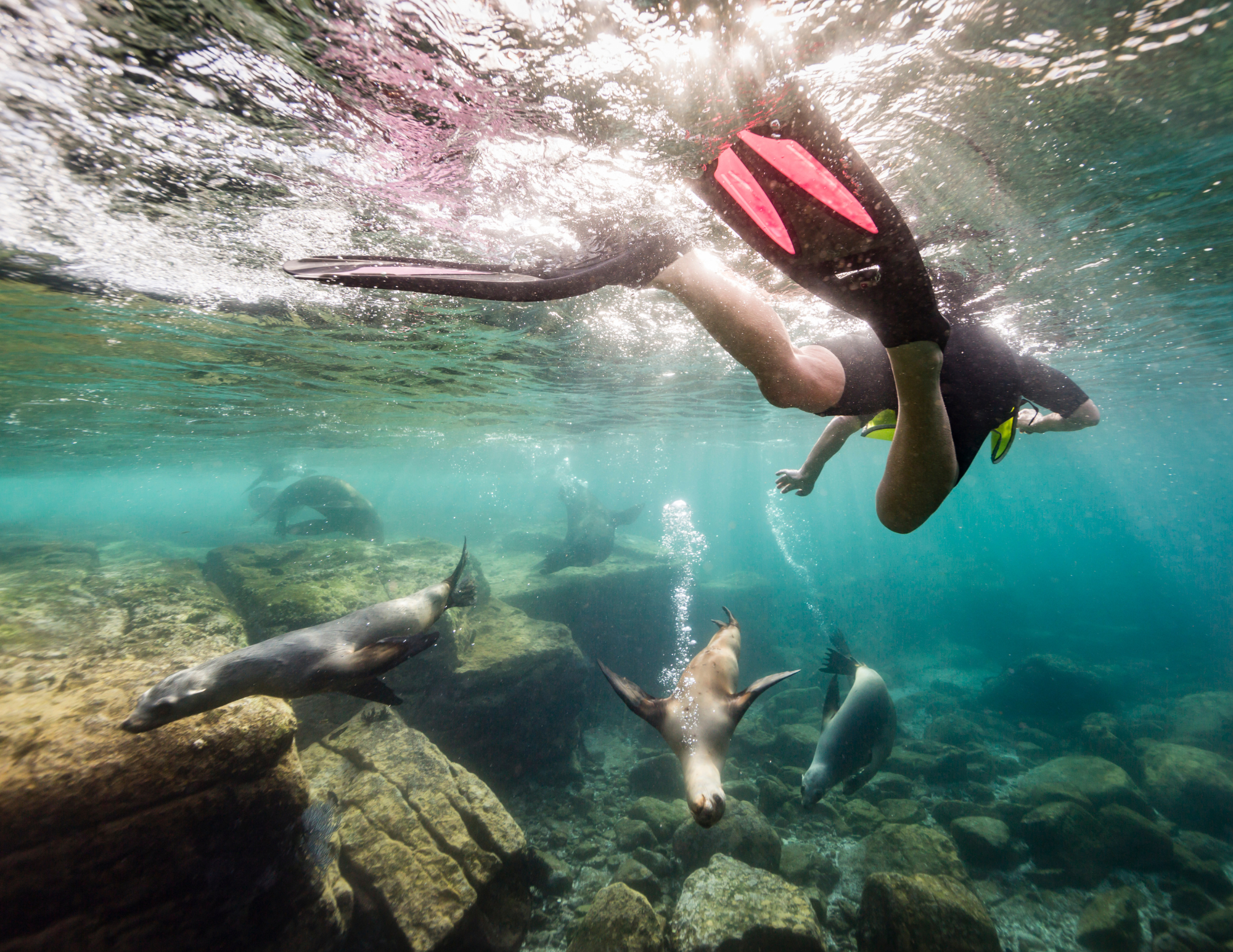
The evolutionary history of sea lions traces back millions of years to the early ancestors of modern pinnipeds, a group that includes seals, sea lions, and walruses. Here’s a brief overview:
- Early Pinnipeds: The common ancestor of modern pinnipeds is believed to have been a land-dwelling mammal that transitioned to a semi-aquatic lifestyle around 23 to 35 million years ago during the late Oligocene to early Miocene epochs. These early pinnipeds likely resembled small carnivores and gradually adapted to aquatic environments.
- Divergence of Lineages: Over time, pinnipeds diversified into different lineages, including the Otariidae family, which includes sea lions and fur seals, and the Phocidae family, which includes true seals. This divergence likely occurred around 15 to 20 million years ago.
- Adaptations to Aquatic Life: Sea lions, like other pinnipeds, underwent various adaptations to thrive in aquatic environments. These adaptations include streamlined bodies for efficient swimming, webbed flippers for propulsion, and thick layers of blubber for insulation and buoyancy.
- Migration and Speciation: Sea lions continued to evolve and diversify as they spread to different marine habitats around the world. Various species of sea lions emerged in different regions, each adapted to its specific environment and ecological niche.
- Modern Sea Lions: Today, there are several species of sea lions belonging to the Otariidae family. These include the California sea lion (Zalophus californianus), Steller sea lion (Eumetopias jubatus), South American sea lion (Otaria flavescens), and Australian sea lion (Neophoca cinerea), among others. These species exhibit adaptations suited to their respective habitats, from the rocky coastlines of the Pacific to the subantarctic islands.
Overall, the evolutionary history of sea lions reflects the fascinating journey of terrestrial mammals transitioning to life in the sea and adapting to a range of marine environments. Studies of fossil records, comparative anatomy, and molecular genetics continue to shed light on the evolutionary relationships and adaptations of these remarkable marine mammals.

 By Beth Statton